
Menu
Root Canal
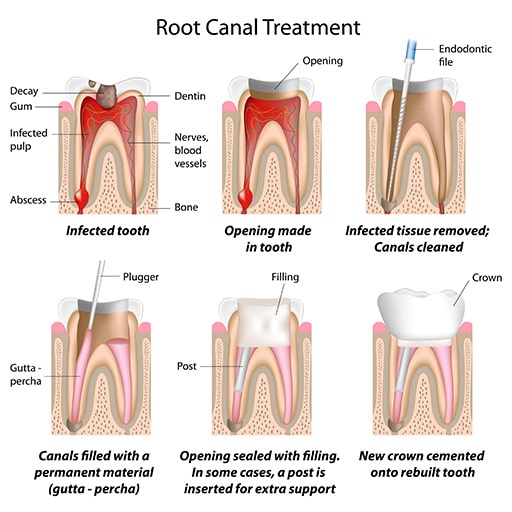
What Is A Root Canal And Should I Get A Root Canal
A root canal is a procedure where the nerve and blood vessels of the tooth are removed, the inside root of the tooth is then cleaned and shaped and it sealed off with a material called gutta-percha.
You should get a root canal when the nerve or the pulp (blood vessels) get damaged or infected and is causing severe sensitivity or pain. This can occur either by trauma (e.g., car accident) or by cavities getting to the pulp.
What to do if I don’t want to get a root canal
You can do nothing and control the pain with painkillers, or you can extract the tooth. Eventually the pulp dies and becomes necrotic, and an infection will form. This is visualized as a dark circle around the root tip on an x-ray. The infection will spread and can affect the surrounding bone and adjacent teeth.
There is no other way to resolve the pain or infection without a root canal and eventually the tooth will be lost.
Root canal myths
Some people believe root canals cause disease and illness but there is no evidence to support this. The longer you wait to do a root canal the further the infection spreads and the more complicated it becomes to treat the tooth.
Frequently Asked Questions
It is a routine dental treatment that removes infected or damaged pulp from inside a tooth to eliminate pain and save your natural tooth from extraction.
Common warning signs include severe tooth pain while chewing, lingering sensitivity to hot or cold, swollen or tender gums, and tooth discoloration.
No; modern techniques and local anesthesia ensure the procedure is highly controlled and virtually painless, feeling very similar to getting a standard cavity filling.
Keeping your natural tooth through a root canal is always ideal, as extractions often require more invasive, costly replacements like bridges or dental implants.
Leaving it untreated allows the infection to spread to your jawbone and surrounding tissues, which can lead to severe swelling, abscesses, and eventual tooth loss.