
Menu
Bridge Vs Implant
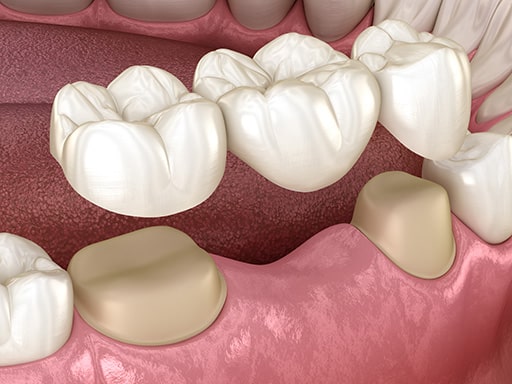
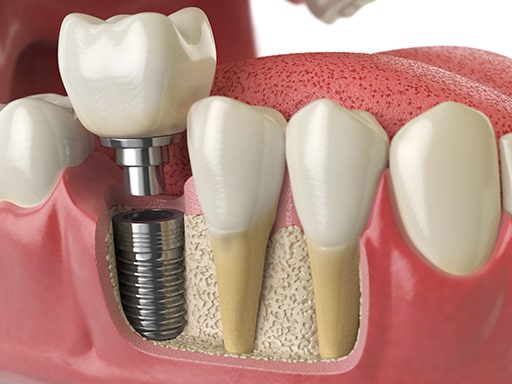
Bridge Vs Implant
If cost is not an issue an implant is better but there are many factors that will decide which is best for you.
Suitability
To do an implant you need sufficient bone height and width. If you are considering an implant to replace a tooth that was extracted years ago it may not be possible because:
- Insufficient volume of bone
- Over eruption of the opposing tooth (insufficient vertical height to place a crown)
- Significant tipping of adjacent teeth
- Poor amount of keratinized gingival tissue
If any of the above apply to your case, you may need advance treatment to prepare the site for the implant. These include bone grafts, gum grafts, braces, restorative treatment. In some cases, an implant is not possible at all.
Indication for a bridge
Many insurances will cover part of the expense of a bridge while most insurances do not cover cost of implants (this may change in future). The overall cost of a bridge is generally lower. The main factors to choose a bridge over an implant:
- Cost
- If the adjacent teeth are weak or need a crown
- If you are not happy with the adjacent teeth esthetics
- Implant is not possible
Other considerations
Bridges are difficult to clean, it is hard to access the underside of a bridge, especially if it’s at the back. Bridges and implants will not get cavities because they are inorganic but for a bridge the tooth structure below the bridge can get new cavities.
Both implants and bridges can be lost to gum disease. Due to the anatomy, it is even more important to have regular maintenance as they are more prone to gum disease.
Frequently Asked Questions
A bridge is preferred if you want a lower upfront cost or if the adjacent teeth are already weak and need crowns. It is also the go-to choice if you lack sufficient jawbone volume or simply want to avoid a surgical procedure.
An implant may not be an option if you have an insufficient volume of bone, significant tipping of adjacent teeth, or poor gum tissue. Additionally, if the missing tooth was extracted years ago, the opposing tooth may have over-erupted, leaving no room for a crown.
Bridges rarely do, but implants may require advanced preparatory procedures if the surgical site is not ideal. These preparatory steps can include bone grafts, gum grafts, orthodontic braces, or other restorative treatments.
Bridges are more difficult to clean because it is hard to access the underside of the artificial tooth, especially at the back of the mouth. Implants stand alone and can be brushed and flossed much more like your natural, individual teeth.
While the inorganic materials used to make both bridges and implants cannot get cavities, the natural tooth structure holding a bridge can still decay. Both options, however, remain equally vulnerable to being lost if you develop severe gum disease.